
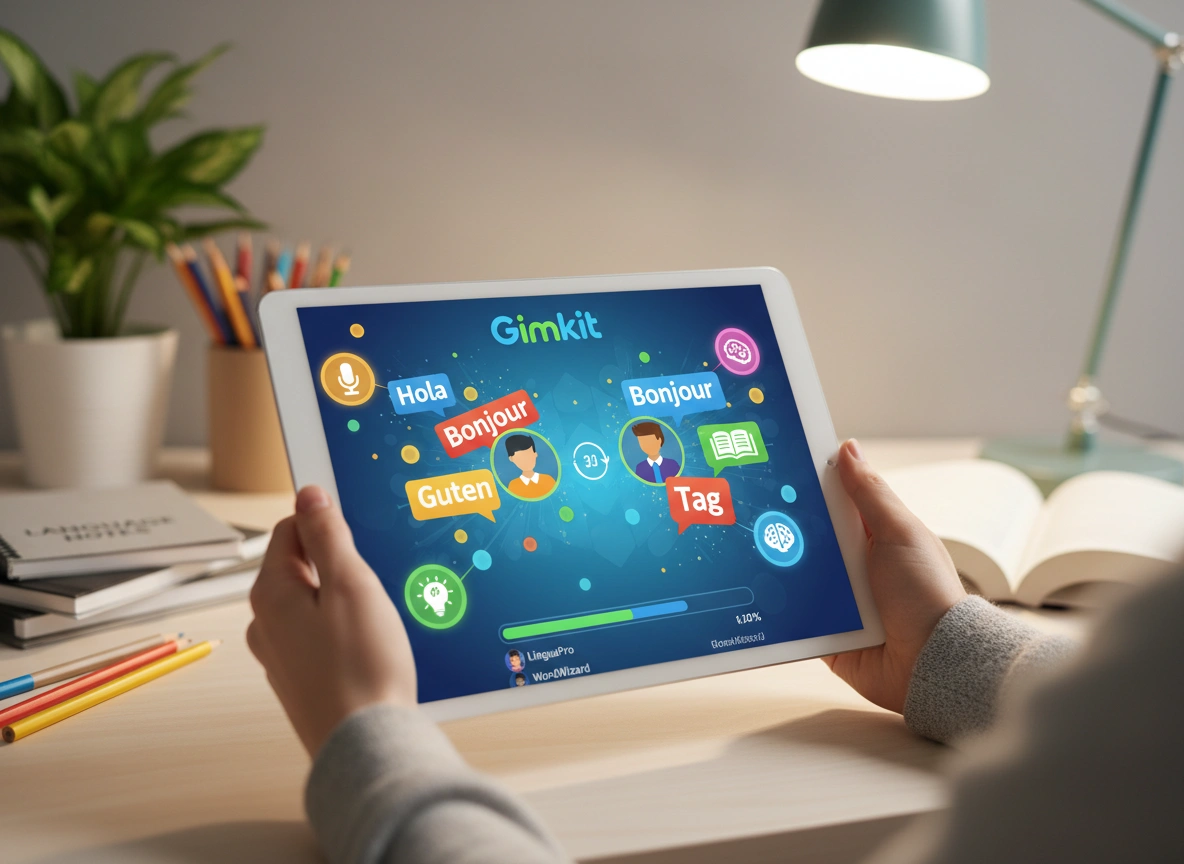

In the evolving landscape of educational technology, gamification has emerged as a powerful tool for engagement and retention. While many platforms compete for attention in the classroom, Gimkit has carved out a unique niche, particularly for language educators. Unlike traditional quiz platforms, Gimkit offers a blend of high-stakes strategy, repetition, and collaboration that aligns remarkably well with the principles of language acquisition.
This article explores how Gimkit can be effectively leveraged to transform language classrooms, offering benefits, practical tips, and strategies to maximize student proficiency and enthusiasm.
The Intersection of Gamification and Language Acquisition
Language learning requires a distinct set of cognitive processes compared to other subjects. It demands frequent repetition, low-anxiety environments to encourage risk-taking, and contextual application. Gimkit addresses these needs through its core mechanic: earning in-game currency to purchase power-ups. This economic layer adds strategic depth that keeps students engaged far longer than a standard multiple-choice quiz.
Benefits of Gimkit for Language Learners
1. Repetition Without Monotony
The most significant barrier to vocabulary retention is the need for repetition. Traditional flashcards can quickly become tedious. In Gimkit, students answer questions repeatedly to earn money. They don’t mind answering the same question ten times because each answer contributes to their in-game bank account, which they can use to buy upgrades. This “stealth repetition” is crucial for cementing new vocabulary in long-term memory.
2. Lowering the Affective Filter
Stephen Krashen’s theory of the “affective filter” suggests that anxiety blocks language acquisition. When students are stressed, they cannot learn. Gimkit’s game modes, especially the collaborative ones like “The Floor is Lava” or “Trust No One,” shift the focus from individual performance anxiety to group goals and gameplay mechanics. Students are often too busy strategizing about upgrades to worry about making a conjugation error, creating a safer space for trial and error.
3. Immediate Feedback Loops
Language learners need to know immediately if they have used a word or structure correctly. Gimkit provides instant validation. If a student answers incorrectly, the correct answer is shown, and they are likely to see that same question again shortly. This immediate correction prevents the fossilization of errors.
Practical Applications in the Language Classroom
Gimkit is versatile enough to cover various aspects of language learning, from basic rote memorization to complex grammatical structures.
Vocabulary Building
Vocabulary is the most obvious application for Gimkit, but it can be executed in nuanced ways.
- Image-Based Kits: Instead of translating word-to-word (e.g., “Dog” = “Perro”), use images. Uploading images directly into the question allows students to map the target language word directly to the concept, bypassing their native language. This encourages thinking in the target language.
- Synonyms and Antonyms: For intermediate learners, create kits that ask for synonyms or antonyms rather than direct definitions. This deepens lexical knowledge and expands their descriptive capabilities.
Grammar Practice
Grammar drills are notoriously dry, but Gimkit can inject energy into them.
- Sentence Completion (Cloze Tests): Create questions where a sentence is missing a key grammatical element, such as a verb ending or a preposition.
-
- Example: “Yo ______ (hablar) con mi amigo.” (Options: hablo, hablas, habla).
- Word Order Challenges: While Gimkit is multiple-choice, you can test syntax by offering different sentence arrangements.
-
- Question: “Which sentence is grammatically correct?”
- Options: “I to the store go,” “I go to the store,” “Go I to the store.”
Conversational Skills and Listening
While often viewed as a reading/writing tool, Gimkit allows for audio integration which is vital for listening comprehension.
- Audio Clips: Use the audio feature to record yourself asking a question or pronouncing a word. The students must select the correct written response or the correct image that corresponds to what they heard.
- Response/Reaction: Pose a conversational stimulus in the question, such as “Comment allez-vous?” and provide various appropriate and inappropriate responses as options. This tests pragmatic competence—knowing what to say in specific social contexts.
Strategies for Educators to Maximize Potential
Simply playing the game isn’t enough; how you structure the session determines the learning outcome.
1. The “KitCollab” Feature
One of the most effective strategies is involving students in the creation process using KitCollab. Have each student write one or two questions based on the current unit.
- Why it works: To write a good question (and wrong answers), students must understand the material deeply. They take ownership of the game, and they get excited when their specific question appears on the screen.
2. Strategic Mode Selection
Different game modes serve different pedagogical goals.
- Classic Mode: Best for individual assessment and identifying students who are struggling.
- Trust No One (Among Us Style): excellent for community building and breaking up the routine. It requires communication and deduction, which can be conducted in the target language for advanced classes.
- Team Mode: fosters peer teaching. Group strong students with struggling ones; they will naturally discuss the answers to ensure the team wins.
3. Pacing and Duration
Avoid “Gimkit fatigue.” A session should ideally last between 7 to 12 minutes.
- The Warm-Up: Use a 5-minute session at the start of class to reactivate prior knowledge.
- The Exit Ticket: Use a short session at the end to assess what was retained from the day’s lesson.
4. Post-Game Analysis
The data report provided after a game is a goldmine. Don’t just close the tab when the game ends.
- Review the “Tough Questions”: Gimkit highlights questions that the class struggled with collectively. Project these on the board and discuss why the class got them wrong. Was it a tricky conjugation? A false cognate? This turns the game into a formative assessment tool.
Engaging Students Beyond the Screen
While the screen is the medium, the learning happens in the student’s mind. Here is how to deepen that engagement.
Metacognitive Discussions
Ask students about their gaming strategy in the target language.
- Question: “Did you buy the multiplier or the streak bonus first? Why?”
- This forces students to use the target language to describe a complex process and justify their decisions, pushing them into higher-order thinking skills.
Homework Assignments
Gimkit can be assigned as homework. Unlike a static worksheet, students can play through the assignment until they reach a target cash goal. This ensures they put in the necessary time and repetition. If a student struggles, they simply play longer to reach the goal, naturally receiving the extra practice they need without being penalized for speed.
Tournament Brackets
Create a semester-long league. Track wins across different classes or periods. This long-term gamification builds a culture of excitement around the language subject. You can have a “Verb Conjugation Cup” or a “Vocabulary Super Bowl.”
Conclusion
Gimkit is more than just a colorful distraction; it is a robust platform that, when used intentionally, supports the fundamental pillars of language learning. By providing a low-stress environment for high-frequency repetition, offering immediate feedback, and allowing for diverse question types ranging from audio comprehension to image recognition, it addresses the multifaceted nature of acquiring a new language.
For educators, the key lies in moving beyond the basic features. By utilizing KitCollab, analyzing post-game data, and integrating the gameplay into broader classroom discussions, teachers can turn a simple quiz game into a comprehensive language acquisition strategy. As education continues to digitize, tools like Gimkit prove that learning a language can be as engaging as it is educational.
Please visit website for more info.

