
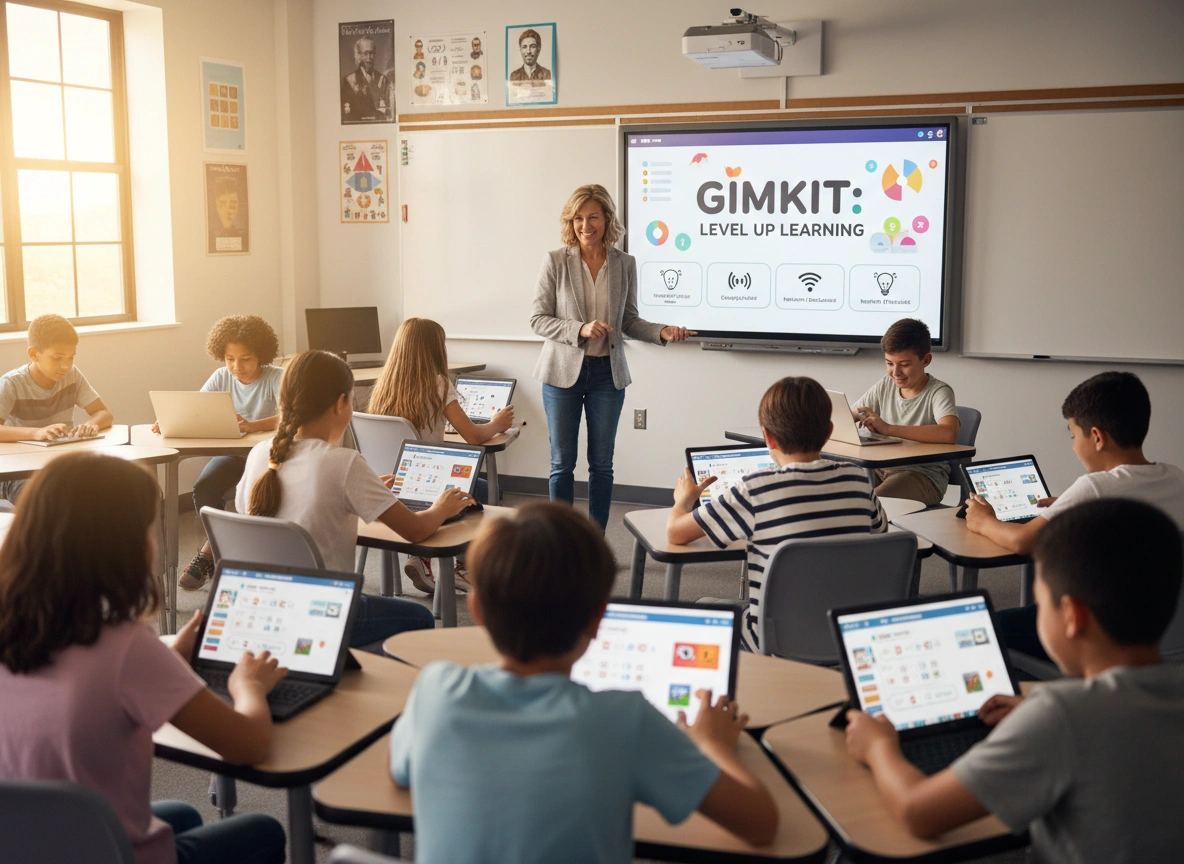

The modern classroom is a dynamic environment where traditional pedagogical methods are constantly being challenged and enhanced by digital innovation. Among the myriad of ed-tech tools flooding the market, gamified learning platforms have emerged as powerful allies for educators seeking to capture student attention in an age of constant distraction. One platform, in particular, has risen rapidly through the ranks to become a staple in many classrooms: Gimkit. Created by a high school student who felt classroom games could be more engaging, Gimkit offers a unique blend of assessment, strategy, and fun. From a teacher’s perspective, it represents more than just a game; it is a versatile instructional tool that reshapes how we approach review, formative assessment, and student motivation.
Beyond the Buzz: What is Gimkit?
At its core, Gimkit is a live learning game show. Students answer questions on their own devices at their own pace. Unlike other platforms where speed is the only variable, Gimkit introduces an economic layer to the gameplay. Correct answers earn students virtual currency (“cash”), which they can then reinvest during the game to purchase upgrades and power-ups. These upgrades might increase the cash value of each question, offer insurance against incorrect answers, or allow players to hinder their opponents temporarily.
This strategic element is what sets Gimkit apart. It shifts the focus from purely recalling facts to managing resources and making strategic decisions. For a teacher, this means that the student who knows the most answers isn’t always the winner; the student who plays the smartest often comes out on top. This democratization of victory is crucial for maintaining engagement across diverse ability levels.
Transforming Formative Assessment
Formative assessment—the ongoing monitoring of student learning to provide ongoing feedback—is the bread and butter of effective teaching. However, traditional quizzes and exit tickets can often induce anxiety or boredom. Gimkit transforms this necessary process into a high-energy event.
When a teacher launches a “Kit” (a set of questions), the classroom atmosphere shifts immediately. Students lean in. The room fills with the sounds of intense focus and occasional bursts of laughter or groans of frustration as power-ups are deployed. But beneath the noise, serious work is happening. The platform provides teachers with detailed reports after every session. We can see exactly which questions stumped the class, which students are struggling with specific concepts, and who has mastered the material.
This data is invaluable. Instead of waiting until a unit test to discover that half the class misunderstood a core concept, a ten-minute Gimkit session reveals these gaps instantly. A teacher can then pivot immediately, re-teaching the material before moving on. The game becomes a diagnostic tool wrapped in entertainment.
Fostering Engagement and “The Grind”
One of the most persistent challenges in modern education is combating student apathy. “The grind”—the repetitive practice required to master vocabulary, math facts, or historical dates—is often where we lose students. Gimkit gamifies this repetition brilliantly. Because earning money to buy upgrades requires answering many questions, students willingly answer the same questions over and over again.
In a traditional worksheet setting, asking a student to answer 50 vocabulary questions might result in rebellion. In a Gimkit session, students might answer 80 questions in 15 minutes without a single complaint, driven by the desire to afford a “multiplier” upgrade. This repetition creates muscle memory and reinforces retention without the drudgery associated with rote memorization. The platform effectively tricks the brain into enjoying the hard work of learning.
Collaboration vs. Competition: Modes of Play
While the classic mode of Gimkit is competitive (student vs. student), the platform has evolved to support collaboration, which is a critical soft skill in modern education. Modes like “Trust No One” (inspired by the social deduction game Among Us) or “The Floor is Lava” require students to work together toward a common goal.
In “The Floor is Lava,” for example, the class must work collectively to keep a construction project above rising lava. If they don’t answer enough questions correctly or fail to coordinate their spending on building blocks, everyone loses. This shifts the dynamic from “I need to beat my classmate” to “I need to help my classmate so we all survive.”
For a teacher, these cooperative modes are excellent for community building. They force students to communicate, strategize as a group, and support struggling peers. The high-achieving student suddenly has an incentive to help the student who is stuck, because the team’s success depends on aggregate performance.
Practical Integration into Lesson Plans
Integrating Gimkit isn’t about replacing instruction; it’s about punctuating it with high-impact activity. Here are several ways teachers can weave it into their curriculum:
1. The “Bell Ringer” or Warm-Up
Start the class with a quick 5-minute session covering material from the previous day. It wakes students up, gets them on task immediately, and refreshes their memory. This “retrieval practice” primes the brain for new learning.
2. The Mid-Lesson Checkpoint
After a 20-minute lecture or direct instruction block, use a short Gimkit session to break the monotony and check for understanding. If the report shows low accuracy, the teacher knows to clarify before assigning independent work.
3. Homework and Independent Practice
Gimkit allows teachers to assign Kits as homework. Students can play at their own pace outside of class. This is far more engaging than a textbook review and provides instant feedback to the student on whether they got an answer right or wrong, preventing the reinforcement of errors.
4. Student-Created Content
A powerful pedagogical strategy is having students create their own Kits. To write a good question and plausible distractors (wrong answers), a student must deeply understand the material. Assigning students to build a review game for the class turns them from consumers of content into creators, engaging higher-order thinking skills.
The Benefits: A Dual Perspective
For the Student:
- Autonomy: Students choose their own path—whether to save money, spend it on risks, or play conservatively.
- Reduced Anxiety: The game environment lowers the stakes of failure. Getting a question wrong is just a temporary setback, not a permanent grade in a gradebook.
- Instant Feedback: They know immediately if they understand the concept.
- Level Playing Field: Strategy allows students who may not be the “smartest” in traditional terms to succeed through savvy resource management.
For the Teacher:
- Real-Time Data: Immediate insight into class performance allows for data-driven instruction.
- Classroom Management: An engaged class is a managed class. Behavioral issues often decrease during Gimkit sessions because students are hyper-focused.
- Versatility: It works for almost any subject matter, from foreign language vocabulary to complex physics equations.
- Ease of Use: The interface is intuitive, and importing questions from other platforms like Quizlet or spreadsheets is seamless.
Impact on Modern Education
The rise of tools like Gimkit signals a shift in modern education toward “edutainment” that doesn’t compromise on rigor. It acknowledges that the current generation of students, often termed “digital natives,” interacts with information differently. They respond to feedback loops, visual stimuli, and interactive systems.
Critics might argue that gamification trivializes learning, turning education into a dopamine chase. However, from a practitioner’s perspective, Gimkit is rarely the meal; it is the seasoning. It makes the hard-to-swallow vegetables of rote learning palatable. It builds a bridge between the necessary academic rigor and the engaging digital world students inhabit outside of school.
Furthermore, Gimkit prepares students for a world where resource management and strategic thinking are as important as raw knowledge. The ability to assess risk (Should I buy this upgrade now or save for a better one?) is a life skill. By integrating these economic principles into a math or history review, we are subtly teaching financial literacy and decision-making.
Conclusion
Gimkit is not a magic wand that solves every educational challenge. It cannot replace the deep relationship between a teacher and a student, nor can it substitute for critical writing or complex project-based learning. However, as a tool in a teacher’s arsenal, it is exceptionally sharp.
It reimagines the review process, turning what used to be the dullest part of the school day into the most anticipated. It provides teachers with the data they need to teach effectively and students with the motivation they need to learn persistently. In the landscape of modern education, where engagement is the currency of the classroom, Gimkit has made us all a little richer.
Please vist this website for more info

